


Your covert narcissist sister selective empathy showed up perfectly at Thanksgiving dinner. She held your hand as your parents watched, her voice cracking at just the right moment, playing the caring sister role with an audience of witnesses. Three hours later, alone in the kitchen loading the dishwasher, she looked straight through you like you weren’t standing there. Not angry. Just empty.
You told yourself you imagined it. You’ve been telling yourself that for years. The warmth when people are watching, the coldness when they’re not. The confusion isn’t a side effect of her personality. It’s the actual mechanism that keeps you doubting what you know you saw. This post breaks down why your sister’s caring has a witness requirement, and why you’re not making it up.
TL;DR
Research-Backed Empathy Split
Cognitive empathy (reading emotions) stays intact while affective empathy (feeling with you) disappears. Mazza et al.’s 2023 review of 52 studies proves narcissists keep detection skills but lose shared feeling.
DSM-5 Diagnostic Shift
“Unwilling to recognize feelings” replaced “lacks empathy” in the DSM-5, meaning she chooses when to care based on audience, not ability.
Superior Pain Detection
Exploitative narcissists detect negative emotions better than average people, using your distress as data collection rather than compassion triggers.
Public Performance Creates Proof
One caring moment at family dinner generates social proof that five witnesses validate. Your private experience can’t compete with documented public performance.
Cognitive Dissonance Engine
Carrying two contradictory versions (public warmth, private coldness) forces your brain to question the one only you saw, systematically destroying trust in your own perception.
When Your Covert Narcissist Sister Only Cares When Others Watch
Selective empathy in a narcissistic sibling isn’t a glitch. It’s audience-dependent behavior with a research trail. NPD affects an estimated 0.5 to 6.2% of the general population, and the covert presentation is the hardest to identify because the empathy looks real when someone’s watching.
Key Research on Selective Empathy in Narcissism
| Study | Sample | Finding |
|---|---|---|
| Mazza et al. (2023), Frontiers in Psychiatry | 52 studies reviewed | Greater impairment in affective empathy; cognitive empathy preserved |
| Simard, Morin & Bhatt (2022) | 100 studies, 31,630 participants | Narcissism shows this empathy split across studies |
| Urbonaviciute & Hepper (2020) | 93 studies, 32,200 participants | Confirmed deficit split across populations; exploitative narcissists better at detecting negative emotions |
| Baskin-Sommers, Krusemark & Ronningstam (2014) | Clinical analysis | Empathy in NPD is “dysfunctional and subject to motivational and situational factors” |
| Hepper, Hart & Sedikides (2014) | Experimental | Narcissists showed empathy when instructed to perspective-take; absent without instruction |
| Finzi-Dottan & Cohen (2011) | 202 young adults | High narcissism predicts low sibling care and high conflict |
| Ronningstam (2016) | Clinical review | Empathic functioning fluctuates with self-regulation and perceived threat |
| Patkos, Birkas & Csatho (2022) | Empirical study | Parental partiality correlates with narcissism development |
What Covert Narcissist Sister Selective Empathy Means
In seven years of coaching survivors of covert family abuse, the question I hear most from siblings isn’t “Is my sister a narcissist?” It’s “Why does she only care when other people are in the room?”
That question has a name. Selective empathy. And the mechanism behind it is more specific than most people realize.
Cognitive Empathy Intact, Affective Empathy Absent
Researchers split empathy into two systems. Cognitive empathy is reading what someone feels, picking up on the sadness and frustration and fear. Affective empathy is feeling it alongside them. Your covert narcissist sister kept the first one. The second is impaired.
Mazza and colleagues reviewed 52 studies in Frontiers in Psychiatry (2023) and found that people with narcissistic personality disorder show “greater impairment in affective aspects while cognitive empathy appears preserved.” She reads your pain with precision. She just doesn’t share it.
Something still surprises me, even after all these cases. Research on exploitative narcissism shows these individuals are better at recognizing negative emotions than average. They’re not missing your distress. They’re looking for vulnerability. Not compassion. Data collection.
A client I worked with for eight months, a woman in her late thirties, told me something I’ve never forgotten. She said: “When our dad was dying, my sister could read every shift in his mood before the nurses could. She knew when he was scared before he said a word. I thought it meant she loved him more than I did. Then I watched her use that exact same skill to figure out when our mother was at her most fragile, walk into the room at that precise moment, and ask for money.”

That’s cognitive empathy without the affective piece. Pattern recognition weaponized. Mancini and colleagues (2023) confirmed in a 52-paper review that emotional empathy is impaired in narcissism while cognitive empathy serves personal purposes. These are classic signs of a covert narcissistic sister using emotional intelligence as a weapon rather than a bridge.
She wasn’t reading the room out of love. She was reading it for advantage.
Simard, Morin, and Bhatt (2022) confirmed it across 100 studies and 31,630 participants: narcissism keeps showing up with this empathy split. The ability to detect emotion paired with the unwillingness to feel it alongside the other person.
Urbonaviciute and Hepper’s 2020 meta-analysis across 93 studies and 32,200 participants confirmed this deficit split across populations.
The DSM-5 Shift: “Unwilling” Not “Unable”
The DSM-III described NPD as someone who “lacks empathy.” The DSM-5 changed that to someone who “is unwilling to recognize or identify with the feelings and needs of others.” The American Psychiatric Association now frames NPD as a pervasive pattern of grandiosity, need for admiration, and lack of empathy beginning in early adulthood.
One word. Unwilling instead of unable. That reframes your entire experience.
Your sister isn’t empathy-blind. She’s empathy-selective. Baskin-Sommers, Krusemark, and Ronningstam (2014) described empathy in NPD as “dysfunctional and subject to a diverse set of motivational and situational factors.” The DSM-5 Alternative Model supports this, framing empathy as a capability that fluctuates by situation.
She can do empathy. She decides when.
When I sit with siblings, this is the piece that lands hardest. Not that their sister can’t feel for them. That she won’t, not when no one is watching her do it.
Here’s what separates selective empathy from normal inconsistency. Everyone has off days. Everyone fails to show up sometimes. But normal empathy lapses are random, tied to stress or exhaustion. Your sister’s pattern isn’t random. It follows the audience. Present when witnessed, absent when private. That predictability is what makes it a pattern, not a personality flaw..
Why a Covert Narcissist Sister Shows Selective Empathy Only With an Audience
Empathy as Narcissistic Supply
Public empathy feeds narcissistic supply. When your sister comforts you at a family gathering, she collects something: the image of the good sister, the caring one. The selfless one who puts family first. Impression management. And it fuels her fragile self-esteem in ways private kindness never could.
I’ve seen this in over a thousand cases. The difference between an overt vs covert narcissist sister is how they chase admiration. The grandiose type does it with direct demands. The covert type chases it through martyrdom, through being seen as selfless, through playing the victim when her sacrifices go unrecognized. Dr. Craig Malkin at Harvard calls this “stealth altruism”: doing good not from genuine concern but to build and protect a self-image. Performative empathy at family events is the cleanest path to that image. The caring isn’t the goal. Being seen caring is.
Baskin-Sommers and colleagues (2014) found that narcissistic individuals use empathic capability “when they feel in control” and disengage when it conflicts with self-serving goals. These are covert narcissist sister manipulation tactics hiding behind the appearance of care. Without an audience, showing up for you generates no return. No witnesses, no supply. No reason to perform.
The Audience Effect on Empathic Performance
Last month, someone in my group described it this way: “It’s like a light switch. The second the last person leaves the room, her face just… empties. Not angry. Just gone.”
The mask dropping. Nobody left to perform for.
The emotional withdrawal in private isn’t punishment in these moments. She just has no motivation to keep the act going.
And the inconsistency, warm at Christmas dinner, cold on the drive home, caring in front of your parents, dismissive on a weeknight phone call, creates intermittent reinforcement. One of the strongest psychological hooks that exists. The confusion? Not a side effect. That’s the part that keeps you attached and self-doubting.
Ronningstam (2016) documented that empathic functioning in narcissism fluctuates with self-regulation and perceived threat, confirming this isn’t stable empathy that fails once in a while. Think of it as a transactional system that activates and deactivates based on what she needs from the moment. Finzi-Dottan and Cohen (2011) studied 202 young adults and found sibling care was hurt by high narcissism. The one-sided relationship you feel isn’t in your head. It’s documented.

How Covert Narcissist Sister Selective Empathy Plays Out in Your Family
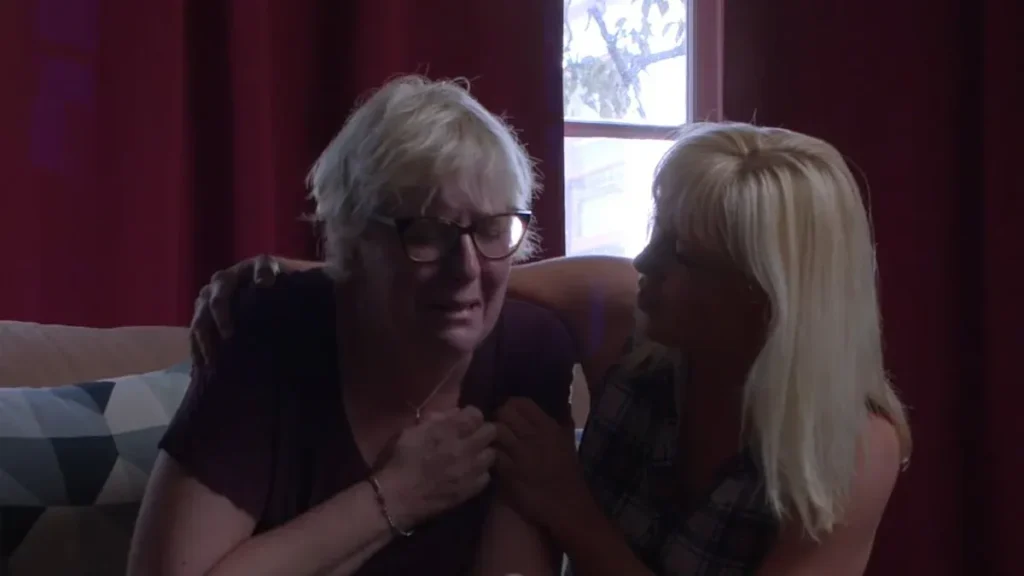
Your father gets sick. She posts about family strength on social media. At the hospital, she holds his hand as your mother watches. Devoted daughter, locked in.
But she doesn’t answer when you call to coordinate care schedules. She “forgets” your update texts. That’s blame-shifting in slow motion. Now she’s the sister who showed up, and you’re the one who “wasn’t there,” even though you handled every piece of logistics nobody photographed.
At your wedding, she gives a toast that makes people cry. Later, alone, she tells you the dress wasn’t flattering. Not cruel. Just a quiet comment with plausible deniability built in. “I was just being honest.” Classic passive-aggressive covert narcissist sister tactics. The psychological debt from the public toast now makes questioning her feel ungrateful.
A client told me her toxic narcissistic sister did this at every milestone for fifteen years, and each time, the family only remembered the toast.
As psychologist Dr. Glowiak has noted, “A sibling with high-level narcissistic traits will bestow empathy upon another during difficult times, but with the intention of it making them look good. This is most often demonstrated in the presence of others, rather than in an individual setting.” That isn’t theory. It’s a clinical observation that maps onto what survivors describe to me again and again.
This pattern has repeated across hundreds of families in my work. The public performance creates flying monkeys without her lifting a finger. Your parents saw the hospital visit. Your guests heard the toast. When you describe the private version, you sound like the difficult sister. The ungrateful one.
Triangulation, built right into the selective empathy pattern itself. She doesn’t have to recruit allies. Her public empathy does it for her.
Research frames this as motivation-based disengagement. What I’ve found in practice is simpler and harder to accept: she knows what she’s doing in both settings. The public display isn’t unconscious habit. The private coldness isn’t absent-mindedness. Both are choices weighed against what each moment costs or earns her.
The Sibling Cost of Covert Narcissist Sister Selective Empathy
The longest-lasting damage isn’t emotional. It’s cognitive.
You stop trusting your own perception.
You carry two contradictory data sets about the same person. Public data says caring sister. Private data says emotional withdrawal. Your brain can’t hold both, so it defaults to questioning the one only you witnessed. Cognitive dissonance. The engine of the self-doubt that’s been running for years.
Finzi-Dottan and Cohen (2011) found high narcissism in siblings predicts both low care and high conflict. Stinson and colleagues (2008) found in a national survey of 34,653 adults that lifetime NPD prevalence was 6.2%, with rates of 7.7% for men and 4.8% for women. Patkos, Birkas, and Csatho (2022) found parental partiality correlates with narcissism development. The golden child and scapegoat split isn’t a pop-psychology label. It has a research base.
Over years, the identity erosion compounds. You become the sister who “always has a problem,” who “can’t just be happy for her.” The emotional labor is one-sided. The exhaustion is yours alone. Learned helplessness inside a narcissistic family system looks like this: you learn, piece by piece, that the family will not return the care you keep giving.
But the damage doesn’t stay inside the sister relationship.
I can say this with confidence after sitting with hundreds of people in this position: selective empathy from one person changes how you receive care from everyone. You start flinching when a friend checks in on you. You distrust your partner’s concern. When someone shows up for you with no audience, you wait for the coldness that follows. If you’re trying to figure out how to deal with a covert narcissistic sister, knowing this ripple effect exists is where it starts.
Your sister’s performative empathy contaminates your ability to trust that any caring is real. That ripple effect is the part most articles never mention.
Why No One Else Sees Through Your Covert Narcissist Sister’s Selective Empathy
She knows what empathy looks like. That’s the whole problem.
Cognitive empathy means she replicates caring behavior so well it passes every social test. One display at a family dinner creates a halo effect that colors how your parents, cousins, and in-laws see her for good. Elleuch (2024) in Frontiers in Behavioral Neuroscience identified structural abnormalities in the anterior insula and prefrontal cortex of individuals with NPD, brain regions tied to emotional processing and empathy regulation. The cognitive wiring works. The emotional wiring doesn’t fire the same way.
Social proof finishes the job. Five witnesses to her holding your hand at dinner creates consensus reality. Your private experience of coldness can’t compete. “But she was SO caring at dinner” becomes the evidence used against you every time you raise a concern. This is why covert narcissist sister abuse is invisible to the people closest to you.
And here’s what makes it worse: your family isn’t doing this to hurt you. They’re gaslighting you through perception, not through malice. They did not see what you experienced. When they say “I don’t know what you’re talking about, she was so sweet,” they mean it. Their version is real to them. Your version is real to you. But five witnesses will always outweigh one, and that math is what keeps you silent.
Hepper, Hart, and Sedikides (2014) published in Personality and Social Psychology Bulletin demonstrated that perspective-taking instructions eliminated the empathy gap in narcissists, proving the capacity is real but self-motivated engagement is absent. She can turn it on. She just needs a reason. And your private pain was never reason enough.
In my experience, narcissistic family systems survive on one rule nobody says out loud: denial. The family needs her to be the good sister because admitting the public performance is a narcissistic act would mean questioning the family’s story about itself. I’ve seen entire families restructure their memory of events rather than accept that the caring sister and the cold sister are the same person.
So your testimony loses. Every time. Not because it’s wrong. Because it threatens what everyone else needs to believe.
Other people’s opinion of her doesn’t erase what you experienced alone.
Conclusion
The selective empathy pattern runs through decades of clinical research. The confusion you carried was by design. Covert narcissism is built to be invisible, and a sister who performs caring only with an audience is the hardest version to name.
You’re not the difficult sibling. You saw both faces. What you saw was real.
FAQs
What Is Selective Empathy In A Covert Narcissist Sister?
Selective empathy means your sister strategically deploys caring behavior only when it yields social admiration or reputation benefits. Research confirms narcissists retain cognitive empathy (understanding emotions) but show deficits in affective empathy (actually feeling them), making their empathy audience-dependent rather than genuine.
Can A Covert Narcissist Sister Truly Feel Empathy?
She can cognitively understand what you’re feeling but struggles to emotionally share those feelings with you. Ritter et al. (2011) found NPD patients showed intact cognitive empathy but impaired emotional empathy, meaning her empathy capacity exists but gets deployed strategically rather than spontaneously.
What Is The Difference Between Cognitive And Affective Empathy In Covert Narcissism?
Cognitive empathy involves understanding what someone feels, while affective empathy involves feeling with them emotionally. A meta-analysis by Urbonaviciute & Hepper (2020) covering 100 studies and 31,630 participants confirmed narcissism correlates with reduced affective empathy but relatively preserved cognitive empathy.
Is Selective Empathy The Same As Performative Empathy?
They overlap significantly as both describe empathy functioning as impression management rather than genuine connection. Performative empathy refers to emotional displays designed for external validation, while selective empathy describes the mechanism of choosing when to perform based on audience presence.
How Does A Covert Narcissist Sister Behave Differently In Public Versus Private?
Publicly, she appears warm, supportive, and caring to maintain her “good sister” image. Privately, she becomes emotionally withdrawn, dismissive, or cold because no audience exists to impress.
Why Does A Covert Narcissist Sister Only Care When Others Are Watching?
Public empathy generates narcissistic supply through admiration, social capital, and maintaining her caring reputation. Hepper et al. (2014) demonstrated narcissists’ empathy is motivationally gated rather than absent, meaning they can empathize but choose when to activate it based on what they gain.
Does A Covert Narcissist Sister Know She’s Faking Empathy?
Awareness varies from conscious manipulation to deeply internalized automatic patterns that feel genuine to her. The DSM-5-TR uses “unwilling” rather than “unable” regarding empathy deficits, suggesting a motivational deficit rather than pure incapacity.
Why Can’t My Family See My Sister’s Selective Empathy Pattern?
Your family witnesses only her public performance, while the halo effect and confirmation bias maintain her “caring sister” image. Covert narcissists maintain plausible deniability where no single incident appears alarming, so only you as the recipient of private coldness see the full pattern.
How Does A Covert Narcissist Sister’s Selective Empathy Affect Sibling Mental Health?
It creates chronic self-doubt, cognitive dissonance, emotional exhaustion, and difficulty trusting genuine empathy from others. Research shows sibling warmth decreases significantly with high narcissism levels, and affected siblings often develop heightened self-blame patterns.
Why Does Intermittent Empathy From A Narcissistic Sister Feel So Confusing?
The pattern mirrors intermittent reinforcement where unpredictable rewards (public warmth) alternate with punishment (private coldness), creating a powerful psychological bond. This resembles trauma bonding mechanisms, making the relationship feel addictive despite being harmful.