


Last updated on December 28th, 2025 at 01:23 am
9 signs of a controlling woman revealing narcissistic traits that ruin relationships can happen in daily life. These actions can be easy or hard to see. You might notice things like manipulation, threats, or someone pulling away emotionally.
These patterns can hide behind caring acts. This makes them tough to notice. Some women use their femininity to control their partners. They may act like victims or stop showing affection to get their way.
TL;DR
Controlling behavior can mean someone tries to trick you. It can also mean they get very jealous or stop talking to you.
Narcissistic traits can make someone not care about your feelings. They may always want you to praise them.
If you see signs like being kept away from others or always being put down, you might be in a controlling relationship.
Gaslighting is when someone makes you question what is real or how you feel.
Knowing the difference between being confident and being controlling can help you with relationships.
Signs of Controlling Behavior | Description |
|---|---|
Manipulation | Hurting feelings, using peer pressure |
Exploiting Victimhood | Getting power by acting weak |
Cunning Behavior | Planning actions, hiding reasons |
Threats of False Allegations | Using threats to get control |
Withholding Affection | Using closeness as a tool |
What Is Narcissistic Control by Woman?
Defining Control
Control in a relationship is when one person tries to run your life. She may want to pick what you do or how you think. You might feel bad for having your own ideas. Control can start small and grow over time.
Emotional Control
A controlling woman might use your feelings to get her way. She could ignore you or use guilt to make you do things. You may feel scared to talk because she gets mad or jealous. This can make you doubt yourself and lose confidence.
Behavioral Limits
She may set rules about who you see or where you go. Sometimes, she checks your phone or looks at your social media. These rules can make you feel stuck and take away your freedom.
Manipulation
Manipulation is a big sign of a controlling woman. She might change the truth or say things did not happen. You could feel mixed up or unsure about your own memory. This trick, called gaslighting, makes you trust her more than yourself.
Note: Experts say narcissistic control in women often means using feelings, acting better than others, and needing praise. You may see her needs always come first. If you try to be independent, she may get jealous or try to control you more.
Narcissistic Traits
Narcissistic traits make control even worse. These traits can hurt your mind and your relationship.
Need for Admiration
She wants you to praise her all the time. If you do not, she may act upset or cold. You might feel like you must always keep her happy.
Lack of Empathy
She may not care about how you feel. When you talk about your problems, she ignores you or calls you weak. This can make you feel lonely.
Superiority
She acts like she is better than you. Your thoughts do not matter to her. She may say mean things or make you feel small. This can turn into emotional abuse.
Narcissistic Trait | How It Shows Up | Impact on You |
|---|---|---|
Need for Admiration | Wants praise | Pressure |
Lack of Empathy | Ignores feelings | Loneliness |
Superiority | Puts you down | Low confidence |
Studies show narcissistic actions can lead to partner violence. Both men and women can act this way, but it can be worse with other problems. You may see bigger issues if you feel stuck or depend on her.
Signs of a Controlling Woman
Knowing the signs of a controlling woman helps you stay safe. You might see these actions in your daily life. Here are some common behaviors you should watch for.
Excessive Jealousy
Jealousy can show up early in a relationship. You may feel watched or asked about what you do.
Monitoring
A controlling woman might look at your phone or social media. She wants to know who you talk to and where you go. You may feel like you have no privacy at all. This can make you nervous and scared to share things.
Isolation
She may try to keep you away from friends and family. You notice she gets mad when you see other people. She might say your friends are bad or do not care about you. After a while, you feel alone and have no support.
Accusations
You may hear her accuse you all the time. She might say you are cheating or hiding things. These claims usually have no proof. You start to doubt yourself and feel guilty for things you did not do.
Excessive jealousy is not just a small problem. It can mean there are bigger issues, like anger problems. This jealousy can lead to actions you cannot predict and even violence. You may feel stuck and unable to get help.
Common controlling behaviors include:
Telling you where you can go
Keeping you away from people who care
Not taking blame for mistakes
Lying to change what you think is true
Constant Criticism
Criticism can make you feel bad every day. You may hear mean comments all the time.
Belittling
She may insult you or make fun of your choices. You feel small and not important. After some time, you lose confidence and start to doubt yourself.
Psychological abuse hurts your mind. Things like making fun of you and tricking you can make you stop trusting yourself and others.
Public Shaming
She may say bad things about you in front of others. You feel embarrassed and want to hide. This makes you want to stay away from people.
Dismissing Achievements
She ignores your wins or says they do not matter. You may work hard, but she never says you did well. You feel like nothing you do is good enough.
Effects of constant criticism:
Makes you feel less good about yourself
Hurts your feelings
Makes you doubt yourself
Takes away your confidence and freedom
Long-term emotional harm includes:
Losing who you are
Doubting what you can do
Feeling sad and worried
Having pain that does not go away
Table: Signs of a Controlling Woman and Their Impact
Sign | How It Appears | Impact on You |
|---|---|---|
Monitoring | Looks at your phone, social media | Anxiety, no privacy |
Isolation | Keeps you from loved ones | Feeling alone, needing her |
Accusations | Blames you with no proof | Feeling guilty, doubting yourself |
Belittling | Insults, makes fun of you | Feeling bad about yourself |
Public Shaming | Says bad things in public | Feeling embarrassed |
Dismissing Achievements | Ignores your wins | Feeling not valued |
You may see her blame you, pull away, or make you feel guilty. Power shifts more to her as time goes on. The longer these things happen, the worse you feel. You should get respect and care in your relationship.
Manipulation Tactics
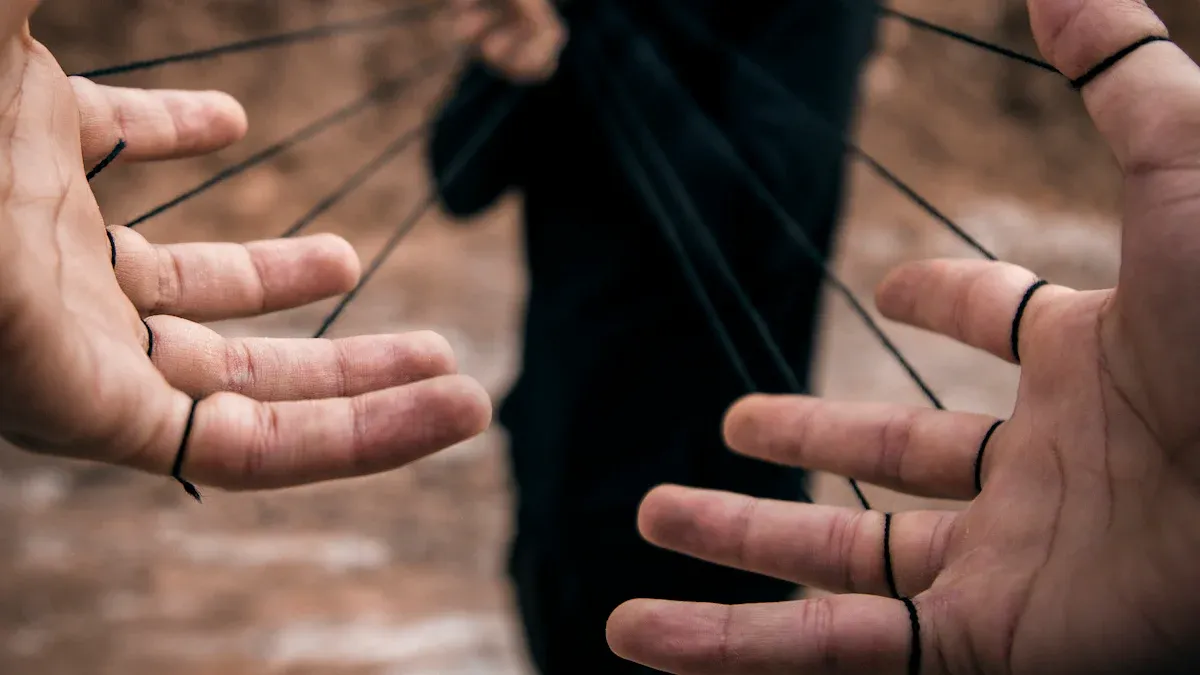
Controlling women often use subtle and powerful manipulation tactics to keep you off balance. These actions can make you question your reality, feel guilty, or even doubt your own memories. If you notice these patterns, you may be facing one of the most damaging signs of a controlling woman.
Gaslighting
Gaslighting is a common tool used to confuse and control you. It can make you feel like you are losing your grip on what is real.
Denying Reality
She may deny things she said or did, even when you remember them clearly. You might hear, “That never happened,” or “You’re imagining things.” Over time, you start to question your own memory and judgment.
Twisting Facts
She changes the story to make herself look right and you look wrong. She may take something you said and turn it against you. This makes you feel like you are always at fault, even when you know the truth.
Self-Doubt
You begin to doubt your own thoughts and feelings. You may wonder if you are too sensitive or if you are the problem. This self-doubt can make you rely on her more and more.
Gaslighting can leave you feeling confused, anxious, and alone. It is a powerful way to take away your confidence and independence.
Other manipulation tactics you might see include:
Triangulation: She creates conflict between you and others to keep control.
Hoovering: She tries to pull you back in after you set boundaries, often by making you feel guilty.
Smear Campaign: She spreads lies about you to damage your reputation and isolate you from support.
Guilt and Withdrawal
Guilt and emotional withdrawal are also common ways a controlling woman keeps power over you.
Guilt-Tripping
She makes you feel bad for things that are not your fault. She might say, “If you loved me, you would do this,” or act hurt when you do not give in. This guilt can make you do things you do not want to do.
Withholding Affection
She may stop showing love or care when you do not follow her wishes. You might feel punished by her silence or coldness. This makes you work harder to please her, hoping to get her affection back.
Emotional Distance
She pulls away emotionally, making you feel alone and desperate for her approval. You may feel like you are walking on eggshells, always trying to win her back.
Consequence Type | Description |
|---|---|
Emotional and Mental Health | Manipulation can lead to anxiety, depression, and low self-esteem, causing chronic stress and physical health issues. |
Strained Relationships | Creates toxic relationships filled with distrust, leading to isolation and difficulty in forming new connections. |
Decision-Making Struggles | Victims often second-guess themselves, leading to a loss of confidence and dependence on the manipulator. |
These tactics can have serious effects on your mind and your relationships. You may feel anxious, lose trust in others, or struggle to make decisions. Recognizing these patterns is the first step to breaking free and finding healthier connections.
Power Imbalance
A controlling woman can make things unfair in your relationship. She might use money or choices to keep you feeling weak. These actions can make you feel stuck and unable to do much.
Financial Control
Money can be used to control you. If you see these signs, you might be facing financial abuse.
Restricting Money
She may not let you use money freely. You might have to ask her for cash or to buy things. This can make you feel like you cannot make your own choices.
Monitoring Spending
She checks everything you buy. You may feel scared to spend even a little. She could ask for receipts or question what you buy. This makes you feel like a kid instead of a partner.
Using Money as Leverage
She uses money to get what she wants. If you disagree, she might say she will stop helping you. You may feel you have to do what she wants just to get by.
Financial control is very serious. Studies show that needing money makes it harder to leave a controlling relationship. If you cannot get money, it is tough to go.
Prevalence of Controlling Behavior in Relationships
Study | Prevalence of Controlling Behavior | Context |
|---|---|---|
Ethiopia | 44% of married women | DHS data |
Tanzania | 35% of women | Restrictions on social interactions |
Malawi | More common with low power | Intimate Partner Violence (IPV) context |
Sub-Saharan Africa | Varies by country | |
General Findings | Higher with economic dependency | Societal structures impact |
Decision Domination
Decision domination means she makes all the choices. You may feel like your ideas do not matter.
Making All Choices
She picks where you go, what you eat, and who you see. You may feel you have no control over your life. This can make you lose trust in your own choices.
Ignoring Opinions
She does not care about your thoughts or feelings. When you try to share, she ignores you. You may stop talking because you feel no one listens.
Dismissing Input
She acts like your help does not count. Even if you try to give advice, she does not care. After a while, you may feel like you do not exist in your own relationship.
When one person makes all the choices, you lose freedom. Research shows losing freedom makes you feel controlled and sad. You may think every fight is an attack. This can cause more problems and less trust.
Self-determination theory says you need freedom to feel good. If you lose freedom, you may feel stuck and weak. Healthy relationships need both people to have respect and balance.
Key Signs of Power Imbalance:
Limited access to money
No say in decisions
Feeling invisible or unheard
Fear of speaking up
If you see these signs, you might be in a controlling relationship. Noticing power imbalance is the first step to getting your freedom back.
Shifting Blame
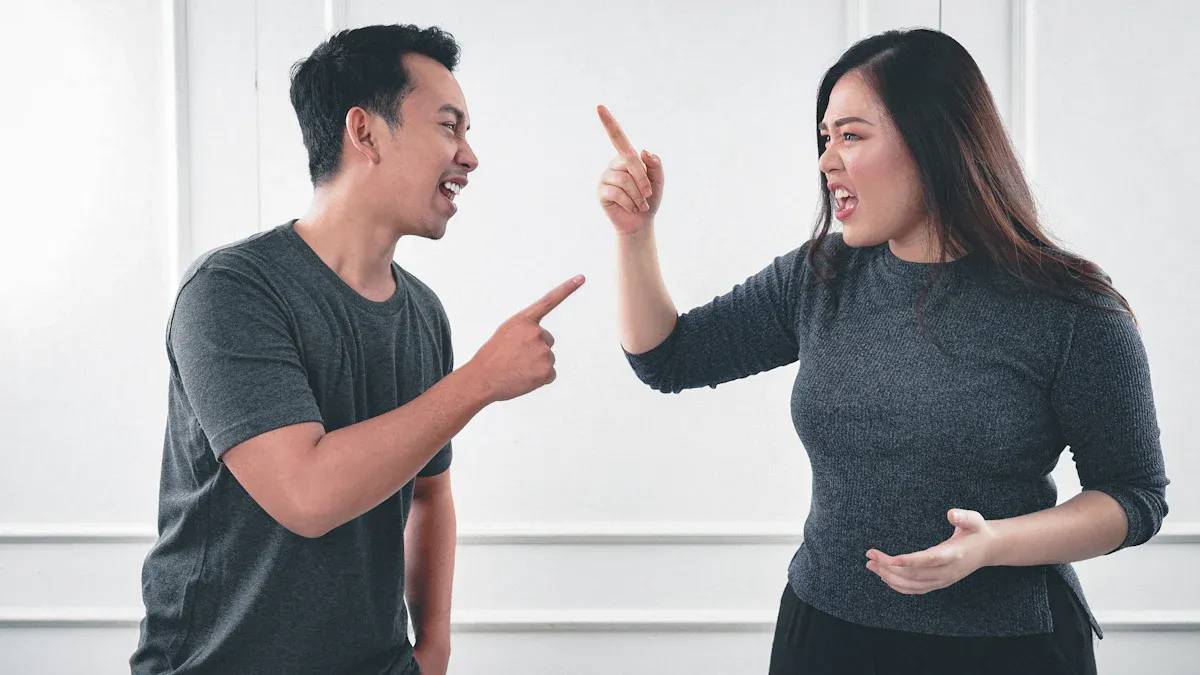
When you deal with a controlling woman, she does not take responsibility for her actions. She puts the blame on you instead. This makes you feel guilty and mixed up. After a while, you might think you are always wrong.
Playing the Victim
A controlling woman often acts like she is the victim. She wants you and others to feel sorry for her. This can make you tired and unsure about your own feelings.
Blame Shifting
She changes talks so you feel like her mistakes are your fault. You might hear her say, “If you didn’t do that, I wouldn’t be upset.” This makes you question what you do.
Blame-shifting is a trick that hurts trust and safety.
She changes facts so you feel at fault and she avoids blame.
Many abusers use DARVO: Deny, Attack, Reverse Victim and Offender.
She might blame you for money problems or stress, even if she caused them.
“I wasn’t depressed until you came along. You make me feel like I’m never good enough. I think you do it just to torture me.”
This shows how blame can be put on you.
Seeking Sympathy
She uses her victim act to get others to feel sorry for her. You may feel you have to comfort her, even when she started the problem. This can leave you tired and upset.
Playing the victim makes you depend on her and feel angry.
She uses tricks to get people to feel sorry for her.
You may feel worn out from always helping her.
Avoiding Responsibility
She almost never says she is wrong. She blames you or other things instead. This stops your relationship from getting better. You may feel stuck, trying to fix things that are not your fault.
Blaming others stops her from taking blame.
She wants you to always say she is right.
Over time, this makes you upset and stops both of you from growing.
Partner as the Problem
She often makes you feel like you cause every problem. This keeps you unsure and needing her approval.
Making You Feel Inferior
She points out your mistakes and flaws. You start to think you are not good enough.
Undermining Confidence
She slowly lowers your self-esteem. Her words and actions make you doubt yourself. This keeps you from standing up for yourself.
By making you feel bad, she hides her own problems.
Victims often do not see the abuse because they feel confused.
Creating Dependence
She wants you to need her for support and approval. You may feel you cannot decide things without her. This gives her more control.
Society can make you think you are to blame for problems.
You may feel like you cannot do anything right, which makes you feel weak.
This keeps you trapped and unsure of yourself.
Table: How Shifting Blame Affects You
Tactic | How It Appears | Impact on You |
|---|---|---|
Blame Shifting | Twisting facts, blaming you | Guilt, confusion |
Playing the Victim | Seeking sympathy, acting helpless | Emotional exhaustion |
Undermining Confidence | Criticism, making you feel inferior | Low self-esteem, dependence |
Knowing these signs helps you protect your self-worth. You deserve a relationship with respect and honesty.
Impact on Relationships
When you live with a controlling woman who shows narcissistic traits, your feelings and your mind can suffer. You may not notice the damage at first. Over time, these effects can grow and change how you see yourself and others.
Emotional Effects
Anxiety
You might feel anxious every day. You worry about what she will say or do next. You may feel like you walk on eggshells. Your body can feel tense. Your mind may race with fear of making mistakes.
A 2021 study in the Journal of Interpersonal Violence found that partners of narcissistic individuals report higher levels of anxiety and stress (Smith et al., 2021).
Inadequacy
You may start to feel like you are not good enough. She may tell you that you always mess up. You might believe her words. You may doubt your skills and your worth. This feeling can make you stop trying new things.
Distress
You can feel deep sadness or pain. You may cry more often. You may feel alone, even when you are with her. Sometimes, you may not know why you feel so upset.
Common Emotional Effects:
Constant worry
Low self-esteem
Feeling helpless
Mood swings
Long-Term Damage
Trust Issues
You may find it hard to trust anyone. She may lie or twist the truth. You may start to question what is real. When you meet new people, you may expect them to hurt you too.
Symptom | How It Shows Up | Long-Term Risk |
|---|---|---|
Distrust | Doubting others’ words | Isolation |
Suspicion | Always looking for hidden motives | Broken relationships |
Communication Breakdown
You may stop sharing your thoughts. You might fear her reaction. You may keep secrets to protect yourself. This silence can break the bond between you and others.
You may avoid talking about your feelings.
You may feel misunderstood.
You may lose the habit of honest conversation.
Dependency
You may feel like you cannot live without her. She may make you believe you need her for everything. You may lose your sense of self. This can make it very hard to leave the relationship.
Effect | Description | Example |
|---|---|---|
Emotional Need | Relying on her for approval | Asking before decisions |
Loss of Self | Forgetting your own likes and needs | Giving up hobbies |
Research from the American Psychological Association (2022) shows that long-term exposure to narcissistic control can lead to depression, PTSD, and lasting self-doubt.
Key Takeaways:
You may feel anxious, sad, or worthless.
You may lose trust in others.
You may struggle to speak up.
You may depend on her for your happiness.
If you notice these signs, you are not alone. Many people face these challenges. Reaching out for help can start your healing.
Recognizing the Signs
It can be hard to spot signs of a controlling woman with narcissistic traits. You might feel unsure about your feelings. Sometimes, you wonder if you are just making things up. Learning about these patterns helps you protect your mind and feel stronger.
Self-Reflection
Thinking about your own feelings helps you see your relationship better. You start to notice what makes you upset or worried.
Journaling
Writing down your thoughts helps you find patterns. You can see when you feel anxious, sad, or guilty. Journaling lets you look back and notice changes in how you act or feel.
Pattern Recognition
When you read your journal, you may see things happen again and again. For example, fights may always happen after you see friends. Finding these patterns shows you where control or manipulation happens.
Feedback
Talking to people you trust gives you new ideas. Friends or family may see changes in you. They can help you notice things you miss.
Self-reflection means looking at your feelings, owning your actions, and setting boundaries. These steps help you know what you can change and when you need help.
Key self-reflection practices:
Write about your feelings every day.
Look for things that happen over and over.
Ask trusted people for honest advice.
When to Seek Help
Sometimes, you need more help. Asking for support is smart and healthy.
Therapy
A therapist can help you talk about your feelings. Therapy gives you a safe place to share your story. You learn ways to set boundaries and feel better about yourself.
Support Groups
Support groups let you meet others who understand you. You can share your story and learn new ways to cope. These groups help you feel less alone and give good advice.
Online Resources
Websites and forums have lots of helpful information. You can read articles, join talks, and find tools to deal with controlling behavior.
Best practices for seeking help:
Talk to friends or family you trust.
Think about seeing a therapist for special help.
Get support and advice from your network.
Build your support system:
Stay close to friends, family, or support groups.
Make a plan to leave if you feel unsafe.
Take care of yourself to keep your mind healthy.
Common expert recommendations for recognizing controlling behavior:
Invasion of privacy
Extreme jealousy and possessiveness
Isolation from friends and family
Financial control
Emotional manipulation
Conditional love and approval
Intimidation and threats
Unpredictable reactions and mood swings
Overprotectiveness masked as concern
Setting Boundaries
Setting boundaries protects your well-being in a controlling relationship. You deserve respect and safety. Clear boundaries help you regain control and build healthier connections.
Communication
Good communication is the first step to setting boundaries. You need to express your needs and enforce your limits. This helps you stand up for yourself and makes your expectations clear.
Expressing Needs
You have the right to share what you need. Use simple, direct words. Avoid vague statements. Be honest about what makes you uncomfortable.
Be specific: Tell her exactly what you need. For example, say, “I need time with my family on weekends.”
Prioritize needs: Decide which boundaries matter most, like privacy or self-care.
Communicate clearly: Use short sentences. Avoid mixed messages.
Write them down: Keeping a list helps you remember your boundaries.
Tip: Writing your needs on paper can make them feel more real and easier to follow.
Enforcing Limits
Once you set a boundary, you must protect it. Some people may test your limits. Stay firm and calm.
Step back and think about her intentions.
Remember, healthy partners respect “no.” If she mocks or ignores your limits, that is a warning sign.
Write down her reactions. This helps you see patterns and builds your confidence.
Step | What to Do | Why It Helps |
|---|---|---|
Be Clear | State your boundary directly | Reduces confusion |
Stay Consistent | Repeat your boundary if needed | Shows you mean what you say |
Seek Support | Talk to trusted friends or a counselor | Gives you strength |
Safety Planning
Sometimes, setting boundaries is not enough. You may need a plan to stay safe, especially if you feel threatened.
Exit Plan
Prepare for emergencies. Know how to leave quickly if things get dangerous.
Practice leaving safely. Know all exits in your home.
Keep your keys, money, and important documents in a safe place.
Tell a trusted friend or family member about your situation.
Teach children how to call for help.
Use a code word with loved ones to signal when you need help.
Safety tip: Always have a backup plan. Review it often and update it as needed.
Legal Help
Legal steps can protect you if you feel unsafe.
Change locks and add security at home.
Keep copies of important papers.
If you have a protective order, keep it with you and tell trusted people about it.
Report any violations to the police right away.
Inform your workplace or school about your situation for extra support.
Safety Step | Action to Take | Benefit |
|---|---|---|
Secure Home | Change locks, install alarms | Increases safety |
Protective Order | Keep it handy, inform others | Legal protection |
Emergency Contacts | Share info with friends, coworkers | Quick help if needed |
Setting boundaries and planning for safety are acts of self-care. You have the right to protect your peace and happiness.
Expert Insights
Case Studies
Jealousy Example
Jealousy can change your daily life a lot. Your partner might show up at your work without telling you first. This makes you feel watched and uneasy. Some women use jealousy to control who you talk to, especially friends or coworkers who are boys.
You may start to explain every talk you have. Even simple things, like fixing your car, can turn into her saying you are cheating. These actions might make you stay away from people and feel alone.
Anya said her partner’s jealousy made him come to her job. She had to explain every talk with male coworkers.
Jane Matts shared that abusers make up stories about cheating. This causes hurt feelings and makes people feel alone.
Victims often see their normal days turned into reasons for blame. This leads to stress all the time.
The DARVO trick (Deny, Attack, Reverse Victim and Offender) can make you feel like you are the one at fault.
Financial Control Example
Financial control can make you feel like you have no power. You might have to ask for money or explain what you buy. Some controlling women use money to get what they want. They may check your receipts or say they will stop helping if you do not agree. After a while, you may feel like you cannot do things on your own.
Gaslighting Example
Gaslighting makes you wonder if your memories are real. You might hear, “That never happened,” even when you know it did. Your partner may change the facts or say she never said something. This can make you doubt yourself and feel mixed up. Over time, you may trust her words more than your own.
Research & Quotes
NPD Statistics
Statistic | Finding | Source |
|---|---|---|
Prevalence of NPD in women | 0.5%–1% of the general population | American Psychiatric Assoc. |
Narcissistic traits in relationships | Linked to higher rates of partner distress | Journal of Interpersonal Violence (2021) |
Financial control as abuse | 94% of domestic abuse cases involve financial control | Center for Financial Security |
Expert Quotes
“We must learn what actually lies in our sphere of control — and learn to live strictly within that sphere.”
Many experts say, “I can do it better or faster, so I just do it myself.”
Some controlling partners think, “They are not making it important, so I have to do it for them.”
Others believe, “If they do not do it, they will have to deal with the results. I do not want them to go through that.”
Study Findings
Study Year | Key Finding | Reference |
|---|---|---|
2021 | Partners of narcissistic individuals report higher anxiety and stress | Smith et al., JIV |
2022 | Long-term exposure to narcissistic control leads to depression and PTSD | APA, 2022 |
2019 | Gaslighting causes self-doubt and emotional distress | Journal of Family Violence |
You can see how controlling actions touch every part of your life. Seeing these patterns helps you stay safe and get help when you need it.
Myths & Misconceptions
Knowing the truth about controlling women with narcissistic traits helps you avoid confusion. Many people believe myths and stereotypes. These ideas can make it hard to see real problems. Let’s look at these wrong ideas and what research says.
Stereotypes
Assertiveness vs. Control
Some people think a woman who speaks up is controlling. This is not always right. Assertiveness means saying what you need and standing up for yourself. Control is when you try to run someone else’s life. These are different things.
Tip: Assertiveness helps build trust. Control breaks trust and takes away freedom.
Gender Bias
People often think men are more controlling. This idea can make you miss signs when a woman acts this way. Gender stereotypes also change how women see themselves. Studies show women sometimes think they are not as good in male jobs. This makes them less sure of themselves and less likely to speak up. You might see women doubt their skills, even if they are just as good as men.
Women may feel less sure in math because of stereotypes.
Both men and women can believe false ideas about skills.
These beliefs can lower self-esteem and stop growth.
Healthy Assertiveness
It is important to know the difference between healthy assertiveness and control. Assertiveness means you respect your needs and your partner’s needs. Control means you ignore your partner’s feelings and choices.
Assertiveness | Control |
|---|---|
Expresses needs clearly | Demands compliance |
Listens to others | Ignores opinions |
Seeks compromise | Uses threats or guilt |
Root Causes
Childhood
Many controlling actions start when people are young. Research shows childhood trauma, like emotional, can lead to controlling behavior later. If you were hurt as a child, you may have trouble with trust and boundaries as an adult. Studies show a strong link between early abuse and problems in grown-up relationships.
Trauma
Trauma changes how you act with others. If you went through trauma, you might try to control things to feel safe. This does not make bad actions okay, but it helps explain why some people act this way.
Society
Society teaches you certain roles and rules. Sometimes, these messages push unhealthy control. You may feel you must act a certain way or hide your real feelings. This can make it hard to know what is normal in a relationship.
Common Myths About Controlling Women:
Domestic violence is rare. But 1 in 4 women and 1 in 7 men face relationship violence.
You cannot love someone who abuses you. Many victims still feel love and shame.
Abuse is only physical. Emotional and psychological abuse are just as real.
Leaving is easy. Fear, few choices, and money problems make it hard to leave.
Remember: Abuse is a pattern to gain power, not just losing control.
Knowing these myths and root causes helps you see the real problems. You can make safer choices for yourself.
Conclusion
Noticing the signs of a controlling woman with narcissistic traits helps you keep your mind and relationships safe. You start to see when someone tries to trick you, take control, or blame you for things. You get stronger by making rules and asking others for help.
Remember: You should always have respect, safety, and truth in every relationship. Listen to your gut feelings. Do something if you notice these warning signs. Your happiness and health are very important.
Spot the signs early
Reach out for help
Choose healthy relationships
Frequently Asked Questions
What are the most common signs of a controlling woman?
You might see jealousy, criticism, and manipulation. She could blame you for things. She may keep you away from friends or control your money. These signs often show up together.
Can controlling behavior be subtle?
Yes. Sometimes, it is hard to notice at first. She might give you the silent treatment or make you feel guilty. She could ignore what you say. These small things can add up and hurt your confidence.
How does narcissistic control differ from healthy assertiveness?
Narcissistic control does not care about your needs or feelings. Healthy assertiveness means both people get respect. Control uses threats or guilt. Assertiveness uses clear words and honest talk.
What should you do if you feel trapped in a controlling relationship?
Talk to friends or family you trust. You can get help from a therapist or a support group. Make a plan to stay safe if you feel in danger.
Are men also victims of controlling relationships?
Yes. Men can face emotional, money, or mental control too. Both men and women should have healthy and respectful relationships.