

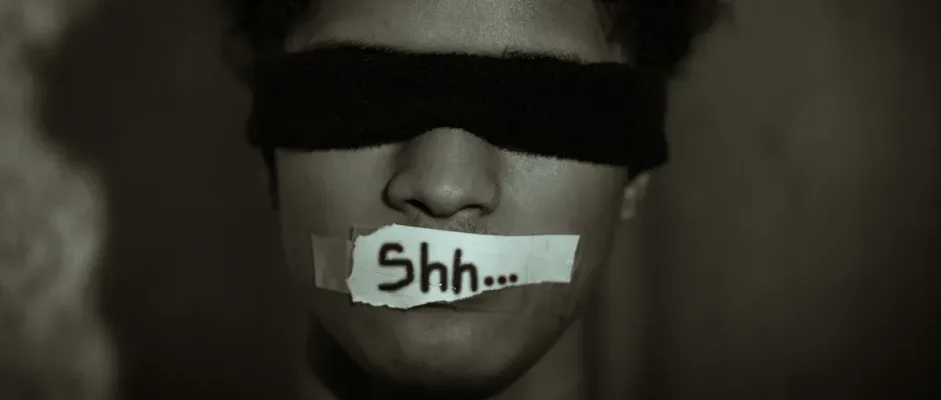
You know something is wrong. You have known for a long time. But every time you try to explain what the covert narcissist in your life has done, the words fall apart. Learn how to dismantle the covert narcissists false narratives. The false narrative they built about you got there first. It reached your friends, your family, your coworkers. It was delivered in a soft voice, wrapped in concern, soaked in tears you once thought were real.
And the worst part? Everyone bought it. You sound bitter. They sound worried. Your reality and theirs don’t match, and no one is asking you for your side.
That gap between what you experienced behind closed doors and what everyone else saw is not a coincidence. It was engineered. If you have spent years walking on eggshells, caught in self-doubt, wondering whether you imagined the emotional withdrawal, the quiet punishments, the stories that didn’t add up, this piece breaks down exactly how that false narrative was built, why it works so well, and what it looks like when you finally see the full architecture.
TL;DR
False Narratives Are Pre-Built Systems: A covert narcissist’s false narrative is not a single lie but an architecture assembled over months through narrative seeding, strategic omission, and performed vulnerability, often before you even realize a story about you exists.
DARVO Flips Every Confrontation: When you speak up, the covert narcissist uses DARVO (Deny, Attack, Reverse Victim and Offender) to turn your complaint into proof of your instability, with the “attack” phase disguised as hurt feelings rather than aggression.
History Gets Rewritten Through Gaslighting: Covert narcissists deliver alternate versions of shared events with such sadness and conviction that your own memory bends, and clinical research on memory malleability confirms this effect is real when the source is someone you trust.
Flying Monkeys Get Recruited Through “Concern”: The covert narcissist’s whisper campaign recruits allies not through gossip but through performed distress, so flying monkeys believe they are helping a friend, never realizing they are spreading a manufactured false narrative.
Dismantling Fails When You Fight Facts Against Emotion: Vulnerable narcissism research by Dickinson and Pincus shows the covert narcissist’s pain is partially real, which means their false narrative runs on genuine emotion, and fact-based corrections bounce off an audience recruited through empathy.
How Covert Narcissists Build False Narratives From Scratch
A covert narcissist’s false narrative doesn’t start with a single lie. It starts with a performance, a form of covert narcissist projection, that can stretch across months or years before anyone, including you, notices what it is.
The foundation never changes: they position themselves as the selfless one. The one who gives too much, sacrifices without complaint, and never asks for anything in return. This performative vulnerability is the raw material for impression management. Pathological Narcissism Inventory research by Pincus and colleagues identified a specific dimension they called “self-sacrificing self-enhancement.” It describes a pattern of inflated generosity that looks like humility on the surface but functions as a way to accumulate moral credit.
Here’s what that means in practice: the covert narcissist builds a ledger. And everything on that ledger will be used later.
A client I worked with for six months nailed it in one sentence. Her partner would say things like, “I’ve given everything to this relationship and this is what I get.” He said it like it was nothing, in passing, sometimes to friends over dinner. She didn’t hear it as a narrative being built. She heard it as frustration. But each time he said “Nobody appreciates what I do,” a version of her was being written in other people’s minds: the ungrateful one. The difficult one.
This is narrative seeding. They plant the story piece by piece through selective disclosure and strategic omission. They share a real event but strip the context. They mention a fight but leave out what they said five minutes before it. Every half-truth they offer sounds reasonable on its own. But once those fragments pile up in someone else’s head, they become a false narrative that makes you the problem and them the one playing victim.
The false self they present to the world is the first chapter. And by the time you realize the story has already been written, the audience already believes it.
The Covert Narcissist’s False Narrative Uses DARVO To Flip Every Story
When you finally try to name what is happening, something strange occurs. Within minutes, you are the one apologizing.
DARVO is a concept identified by psychologist Dr. Jennifer Freyd at the University of Oregon. It stands for Deny, Attack, Reverse Victim and Offender. Understanding DARVO as a covert manipulation tactic is critical here, because the covert narcissist’s version is so disorienting: the “attack” phase doesn’t look like an attack at all. It looks like pain. It looks like someone who has been wounded, wronged, gutted by your words.
You say, “What you said at dinner hurt me.” They respond: “I can’t believe you would accuse me of that after everything I’ve done.” That’s the deny. Then comes the covert attack, not raised voices but a wounded withdrawal. Quiet tears. A soft word to a mutual friend: “I don’t know what I did wrong.”
And then the reversal clicks into place. The perpetrator-as-victim flip is complete. You are now the aggressor. They are the wounded party, hurt by your “accusations.”
Freyd’s research on DARVO found something that applies here in a specific way: bystanders are more likely to side with the person who appears most vulnerable. The covert narcissist has spent years building that appearance. So when the flip happens, it works. People rally around them. And you, the person who tried to speak up, are now isolated and questioning whether you were wrong to say anything at all.
“I’m sorry you feel that way” is not an apology. It is false accountability. It accepts nothing. It concedes nothing. And it shifts the blame back to you, a textbook example of blame-shifting in covert narcissism. The false narrative survives every confrontation because every confrontation feeds it. The more you push back, the more “proof” they have that you are the unstable one.

How The Covert Narcissist’s False Narratives Rewrite Your Shared History
There is a particular kind of confusion that comes from someone rewriting events you both lived through. It follows the pathological lying patterns in covert narcissism, but it runs deeper than ordinary dishonesty.
You remember the conversation. You remember what was said, the tone, the exact words that made you feel small. And then they tell you, with calm certainty: “That’s not how it happened at all.” Or: “You always exaggerate things.” Or worse: “You’re remembering that wrong. I was trying to help you.”
What makes gaslighting as a covert narcissist tactic so effective in its most targeted form is that the covert narcissist has a specific advantage when doing it. Unlike someone who lies with obvious aggression, the covert narcissist delivers their version with sadness. With hurt. With the kind of sincerity that makes you stop and think, wait, did I get that wrong?
Clinical research on memory malleability shows that repeated confident restatements from a trusted person can actually change how someone recalls events. This isn’t theory. When someone you love tells you with conviction and apparent pain that the event happened another way, your memory bends. You start holding two versions of one moment, unable to trust either one.
That manufactured confusion is the goal.
I had a client describe a moment that stopped me cold. Her mother had said something cutting at a holiday dinner, something my client replayed in her head for days. When she brought it up, her mother looked at her with tears and said, “I never said that. Why would I say something like that?” My client told me: “I knew she said it. But she looked so damn hurt by the accusation that I started wondering if I made the whole thing up.”
That is the covert narcissist’s distorted reality at work. The cognitive dissonance it creates, holding your own memory against their emotional conviction, is exhausting. And it is by design. The intermittent reinforcement makes it worse: sometimes they admit a version close to what you remember, just enough to keep you trusting them. Then the next time, they deny everything again.
The covert narcissist doesn’t need you to believe their version in full. They just need you to stop trusting yours.
Flying Monkeys and How The Covert Narcissist’s False Narratives Recruit Allies
The false narrative doesn’t stay between the two of you. It can’t. It needs an audience to function.
Covert narcissists recruit allies the way they build everything else: through performance. They don’t gossip. They “worry.” They don’t talk behind your back. They share “concerns.” That’s the whisper campaign, and according to narcissistic smear campaign research, it is far more effective than any loud covert narcissist smear campaign because it sounds like love.
“I’m really worried about them. They haven’t been themselves lately.” “I don’t want to say anything bad, but I’m concerned.” “I’ve tried everything. I don’t know what else to do.”
Each of these statements deposits a small seed in someone else’s mind. The person hearing it feels compassion for the covert narcissist and suspicion toward you, and they may never realize that what they just received was a recruitment pitch. Clinical research on narcissist smear tactics confirms that these campaigns work because they control how others view both the narcissist and the target.
Understanding flying monkeys in covert narcissist dynamics helps make sense of what happens next. Flying monkeys is the term the survivor community uses for people who have been recruited to carry the covert narcissist’s narrative without knowing it. They believe they are supporting a friend, checking in on someone, or trying to help. Some become active enablers, reinforcing the covert narcissist’s version of events without ever questioning it. They don’t see the triangulation in covert abuse because it was designed to be invisible. Research on bystander responses in abuse contexts supports this: observers tend to align with whoever presents as most vulnerable.
In my consultations, this is the moment survivors describe as the loneliest. Friends start acting strange. Family asks odd questions. People reference things you never said. The social isolation doesn’t happen through direct exclusion. It happens through narrative control: the covert narcissist tells a story that makes your reactions look irrational and their suffering look noble.
By the time you realize what happened, the audience has already made up its mind. And the people you thought would believe you are now part of the machine.
Why The Covert Narcissist’s False Narratives Are Harder To Dismantle Than Overt Lies
You tried to correct the story. You laid out facts. You showed evidence. And nothing changed.
You didn’t fail. The covert narcissist’s false narrative was never built on facts. It was built on emotion.
Research by Dickinson and Pincus found something that complicates this pattern in a specific way: vulnerable narcissists, the clinical term for the covert type, experience real interpersonal distress. A qualitative study on pathological narcissism confirmed that vulnerable narcissism includes identification with victimhood and the construction of a false self. Their pain is not always manufactured from nothing. They do feel wronged, overlooked, and underappreciated, because their narcissistic vulnerability includes real shame and hypersensitivity. So when they cry, the tears can be real. When they say “Everyone can see how hard I try. Why can’t you?” part of them means it.
That paradox is what makes dismantling so difficult. The false narrative runs on real emotion put to work for a manufactured purpose. You are not fighting a liar. You are fighting someone whose distorted version of events is powered by real feelings, and that covert narcissist victim mentality makes it look and sound convincing to anyone watching.
“Ask anyone. They’ll tell you I’ve been nothing but good to you.” This phrase works because of impression management. The public persona versus private cruelty split they built, the false self, is not a thin disguise. It is years of performative vulnerability and false humility. They have been the “nice one,” the “patient one,” the self-sacrificing martyr, for as long as anyone can remember. So when you push back, you aren’t just contradicting a story. You are contradicting something that an entire social circle has accepted as truth.
“I just want peace. You’re the one creating problems.” And you stop pushing. Because the weaponized empathy turns your own compassion into a chain. You can see the mask of humility, but nobody else can. And that is the covert narcissist’s greatest protection: plausible deniability that is backed by real emotion.

The Covert Narcissist’s False Narrative Patterns You Can Spot Today
Once you see the architecture, individual patterns start standing out.
Context stripping. They tell a true story but remove the context. “She just started screaming at me” is a real event. What they leave out is the thirty minutes of passive-aggression, the silent treatment as covert punishment that morning, the quiet put-down that no one else heard. The reaction they provoked is all that gets reported. The provocation stays invisible.
This is the provoke-and-report pattern, and it feeds right into reactive abuse framing. In my experience working with survivors, it is one of the most recognized and least discussed forms of covert aggression. They push until you react. Then they report your reaction as if it came from nowhere. “See? This is what I’m talking about. Look at how they’re acting.” Your reaction becomes the entire story. Their provocation disappears. Micromanipulation research in Psychology Today describes these as intentional ways of redirecting the story, small enough to deny but frequent enough to shift the entire picture.
Strategic timing. False narratives are deployed right before a moment where you might gain support. Before a family gathering. Right when you get closer to a friend. During your milestone, your promotion, your birthday. The manufactured crisis appears just in time to drag attention away from you and back to them.
Selective truth and false equivalence. They share something real, pair it with something distorted, and present both as equal. “We both said things we didn’t mean” sounds fair. But it erases the difference between your frustrated reaction and their intentional emotional manipulation. It creates a false balance that protects the false narrative from scrutiny.
If people around you have started asking if you are “okay” without context, if conversations you never had are being referenced back to you, if your own reaction is the only part of the story anyone seems to know about, if you keep catching unprovable tone shifts that vanish the moment someone else walks in, you are inside a false narrative that has been seeded, watered, and grown without your knowledge.
What The Covert Narcissist’s False Narrative Costs You
There is a clinical term for what happens when someone works to destroy your ability to trust your own perception, piece by piece, over years. It is called epistemic abuse. And it is the cumulative cost of living inside a covert narcissist’s false narrative for years.
You stop trusting your memory. You stop trusting your judgment. You second-guess what you heard, what you saw, what you felt. Research connecting covert narcissism to C-PTSD in victims documents this specific outcome: the person who endured the false narrative doesn’t just lose a relationship or a social circle. They lose the ability to trust what they know.
The identity erosion creeps in so quiet that most survivors I’ve worked with don’t realize the full extent of it until much later. I’ll be honest: early in my practice, I underestimated how deep this went. I thought naming the pattern would be enough. It isn’t. One woman told me, “I don’t even know what I think anymore. Every opinion I have, I wonder if it’s real or if they put it there.” That is what betrayal trauma does when it operates through a false narrative: it doesn’t just distort the past. It breaks apart the present.
It takes survivors an average of seven to ten years to recognize the pattern for what it is. That delay is not a failure of intelligence or awareness. It is a feature of the abuse. The false narrative was designed to keep you from seeing it.
The confusion was never a sign that something was wrong with you. It was evidence that the system was working exactly as it was built to work. What you lived through has a name. It has a shape. And it was never a series of misunderstandings.
You weren’t imagining it. The false narrative was real. And the fact that you can see the architecture now means it has already started to lose its hold.
You don’t have to figure this out alone.
Work with Mr. Som Dutt — a coach who understands narcissistic dynamics inside out.
Whether you’re a survivor or recognizing narcissistic patterns in yourself — I help you see the cycles clearly and move forward.
For Survivors
Partners, spouses, parent/child, siblings, friends & colleagues — see the patterns, reclaim clarity.For Narcissists Seeking Change
Awareness is the hardest step. I help you understand and manage your behaviour.FAQs
How Do Covert Narcissists Build False Narratives Without Getting Caught?
They seed stories over weeks or months through casual “concerns” and performed distress. Each piece sounds reasonable on its own, so the false narrative gets assembled in other people’s minds before you even know it exists.
What Is The Most Common False Narrative A Covert Narcissist Uses?
The most common false narrative positions the covert narcissist as the long-suffering caretaker and you as the ungrateful or unstable one. This manufactured version of events inverts reality but appears believable to outsiders who only see the public persona.
How Can You Tell If A Covert Narcissist Is Building A False Narrative About You?
Watch for friends or family asking if you’re “okay” without context, or people referencing conversations you never had. These are signs the covert narcissist has been running a whisper campaign and seeding a false narrative behind your back.
Why Do People Believe The Covert Narcissist’s False Narratives?
Covert narcissists appear humble, caring, and wounded. Their false narratives come wrapped in “concern” for you, which makes bystanders feel they are supporting someone in pain rather than participating in emotional manipulation.
How Does DARVO Help The Covert Narcissist Maintain False Narratives?
DARVO allows the covert narcissist to deny what happened, attack your credibility through performed hurt, and reverse victim and offender roles so the person who spoke up looks like the aggressor. The “attack” phase looks like tears, not anger.
Can You Dismantle A Covert Narcissist’s False Narrative Once It’s Established?
Dismantling is hard because the false narrative was built through emotional performance, not facts. Fact-based corrections bounce off an audience that was recruited through empathy and performative vulnerability, not logic.
How Does The Covert Narcissist’s False Narrative Differ From Regular Lying?
Regular lying involves stating something untrue. The covert narcissist’s false narrative is a long-term story built from half-truths, strategic omissions, and performed vulnerability that feels true to everyone watching because it contains real emotion.
What Role Do Flying Monkeys Play In The Covert Narcissist’s False Narratives?
Flying monkeys are third parties recruited, most of the time without their knowledge, to validate and spread the covert narcissist’s false narrative. They believe they are helping a friend, not participating in triangulation or a smear campaign.
How Do Covert Narcissists Use False Narratives To Rewrite Shared History?
They retell past events with stripped context, shifted blame, and added emotional weight. Over time, you start doubting your own memory because the covert narcissist’s version is delivered with such conviction and apparent pain.
What Happens When You Confront A Covert Narcissist About Their False Narratives?
Confrontation triggers DARVO almost every time. The covert narcissist denies the false narrative exists, attacks your motives for bringing it up, then positions themselves as the one being harmed by your “accusations.”
Last Updated on 11 April 2026 by Som Dutt